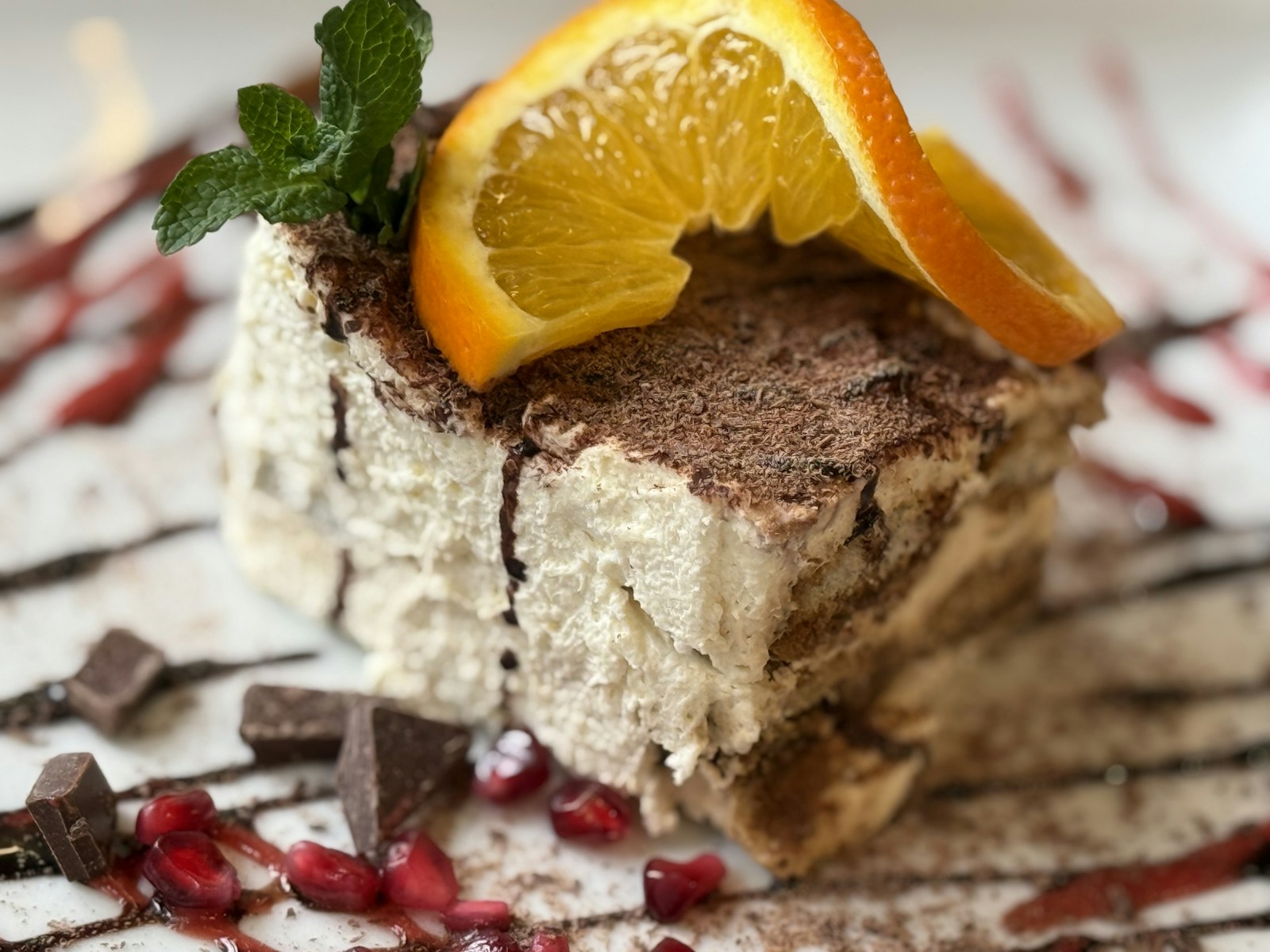
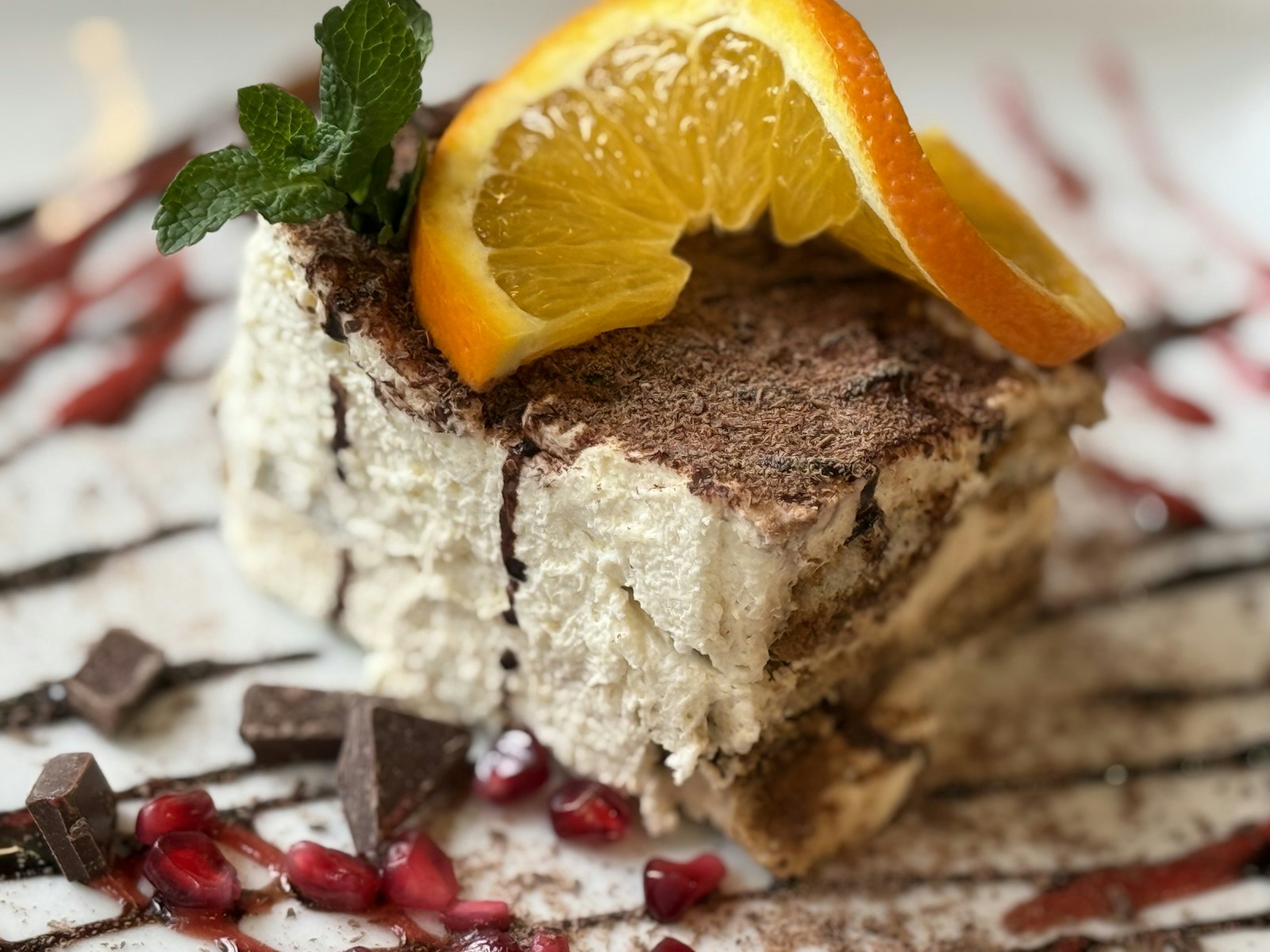
On a deed registered in Treviso on 28 July 2010 — Notarial Deed n. 7947 — the Italian Academy of Cuisine officially codified the tiramisù recipe of Le Beccherie restaurant, the dish’s acknowledged birthplace, as the authentic version. The act was not symbolic. It was a defensive measure against four decades of shortcuts, substitutions, and international embellishments that had reduced the dessert to a genre of sweetened mascarpone pudding with a vague coffee flavour. The original, invented in the early 1970s by the restaurant’s owner Ada Campeol and pastry chef Roberto Loli Linguanotto, contains six ingredients and no shortcuts at all.
This is that recipe, tested multiple times in my kitchen in the last month, with the notes and the reasoning that a simple list of steps cannot convey. If you have made tiramisù with cream, with Marsala, with cocoa between the layers, or with pre-brewed moka coffee from a carton, you have not made tiramisù. You have made something adjacent. The difference is not pedantry; it is the difference between a dish that tastes like itself and a dish that tastes like a compromise.
The story of the recipe
The invention happened between 1971 and 1972 at Le Beccherie, a restaurant on Piazza Ancilotto in central Treviso, in the Veneto region about thirty kilometres north of Venice. Ada Campeol, the owner’s wife, had recently had a child. Her mother-in-law, Madame Ada, would prepare her a reconstituting breakfast of zabaglione and coffee — a traditional Venetian mother-figure’s meal for a tired new mother — and the combination of those flavours became the seed of the restaurant’s dessert experimentation.
Alba and Linguanotto tried cream, then ricotta, then other soft cheeses before settling on fresh mascarpone, which at the time was a lesser-known Lombard product mostly used in baking. The name “tiramesù” — from the Trevisan dialect, literally “pick me up” — was applied to the dish in a local dialect joke about how the zabaglione-and-coffee combination revived a tired mother. It entered the restaurant’s menu as “Tiramesù” sometime in 1971 or 1972; the earliest confirmed menu printing is from 1972.
The recipe spread slowly. For the first decade it was a Veneto regional speciality, documented in Italian cookbooks by the mid-1980s and making its way onto Italian restaurant menus internationally through the early 1990s. What Campeol and Linguanotto could not have anticipated was how aggressively the dish would be altered abroad. By the 2000s, versions with whipped cream, various spirits, and alternative biscuits dominated international tiramisù. The 2010 notarial deed was a late attempt to reclaim the recipe’s integrity.
Ada Campeol died in Treviso in 2021, at age 93, after years of patient corrections to interviewers who tried to put rum or cream in the dessert she had invented. The recipe below is hers.
Ingredients, and why each one matters
The six essential ingredients are mascarpone, eggs, sugar, savoiardi, espresso, and cocoa. The quantities below serve eight generous portions in a roughly 22 by 30 centimetre rectangular dish, which is the standard Venetian household dimension for the dessert.
- 500 g fresh mascarpone (one rich, one large tub in most Italian supermarkets)
- 6 very fresh medium eggs (approximately 300 g total), yolks and whites separated
- 100 g caster sugar, divided — 80 g for the yolk cream, 20 g for the whites
- 300 g savoiardi (Italian ladyfingers), roughly 24 biscuits
- 400 ml strong espresso, cooled to room temperature, unsweetened
- Unsweetened cocoa powder for dusting — about 30 g
- A small pinch of fine sea salt (for the whites)
The mascarpone must be fresh. The difference between a good mascarpone (Granarolo, Galbani Santa Lucia, or any artisanal brand from a Lombardy dairy) and a commodity one is immediate and decisive. Fresh mascarpone has a clean, slightly sweet dairy flavour and a texture halfway between thick cream and unsalted butter. Cheaper brands can be grainy or slightly sour, and no amount of beating will correct that. If you can buy it at a specialist Italian deli within three days of using it, do.
The eggs matter as much as the mascarpone. Because the dessert is traditionally made with raw eggs, their freshness is a food-safety question as well as a flavour one. Buy eggs with a visible laying date within the last four to five days. For children, pregnant women, the elderly, or anyone immunocompromised, use pasteurised eggs in cartons (Italian supermarkets stock them; check the fresh-egg section). The texture of pasteurised eggs is very slightly different — the whites do not whip quite as tall — but the difference is minor in the finished dessert.
The savoiardi must be proper Italian ladyfingers, not American ladyfingers (which are softer and denser) and not any form of sponge cake. The standard Italian brand — Bonomi, Vicenzi, Balocco — is correct. The biscuit must be firm, dry, and hold structure when briefly dipped in coffee.
The espresso must be real espresso, pulled from a moka pot or an espresso machine, not filter coffee and not instant. It should be strong, bitter, and unsweetened. 400 ml is three or four double moka cycles; let it cool completely, to room temperature, before using. Hot coffee destroys the texture of the savoiardi.
The cocoa for dusting is the simplest ingredient with the widest quality range. Use unsweetened Dutch-process cocoa with high cocoa solids. Valrhona, Cacao Barry Extra Brute, or the Italian-made Pernigotti are the standard choices. Supermarket-brand cocoa is adequate but flatter in flavour.
What you do not add
No cream. No whipped cream. No heavy cream of any kind. The texture of authentic tiramisù comes from mascarpone and whipped egg whites, not from whipped cream. Adding cream thins the flavour and gives the finished dessert a slightly artificial stability that the original specifically lacks.
No alcohol. Not Marsala, not Amaretto, not rum, not brandy, not coffee liqueur. The 1972 recipe is alcohol-free. Later versions in international cookbooks added Marsala because it fit the zabaglione ancestry of the dish, but Campeol explicitly excluded it; she felt it overwhelmed the mascarpone.
No cocoa between the layers. Cocoa appears only on top, dusted just before serving. Burying cocoa between layers is an Americanised variant that disrupts the moisture balance and makes the finished dessert muddy rather than layered.
No vanilla extract, no citrus zest, no spices of any kind. The dessert works because of the restraint of its palette: dairy, egg, coffee, sugar, cocoa. Nothing else.
Method
Step 1. Brew and cool the coffee. Pull or brew 400 ml of strong espresso. If you are using a moka pot, plan to fill it three or four times depending on its capacity. Transfer the coffee to a wide shallow dish as you brew, so it cools faster. Do not add any sugar. Let it reach room temperature, about 20 minutes.
Step 2. Separate the eggs carefully. Six eggs, yolks in a large mixing bowl, whites in a second clean bowl. Any trace of yolk in the whites will prevent them from whipping properly. If a yolk breaks into the whites, pour all the whites into a third bowl and start fresh.
Step 3. Beat the yolks with sugar. Add 80 g of the sugar to the yolks. Beat with a hand whisk for about 4 minutes or with electric beaters on medium for 2 minutes until the mixture is pale yellow, thickened, and forms a slow ribbon when the whisk is lifted. This is the same technique as for zabaglione.
Step 4. Fold in the mascarpone. Add the 500 g of mascarpone to the yolk mixture in three additions. Fold gently with a rubber spatula each time, working from the bottom upward, until completely smooth with no lumps. Do not beat; beating breaks down the mascarpone’s structure. The consistency should be like thick pouring cream.
Step 5. Whip the whites. In the clean bowl, add a pinch of salt and the remaining 20 g of sugar to the whites. Whip with electric beaters — a hand whisk works but is slow and tiring — until they form soft, glossy peaks that just hold their shape. Do not overwhip to dry peaks, which would make them difficult to fold cleanly.
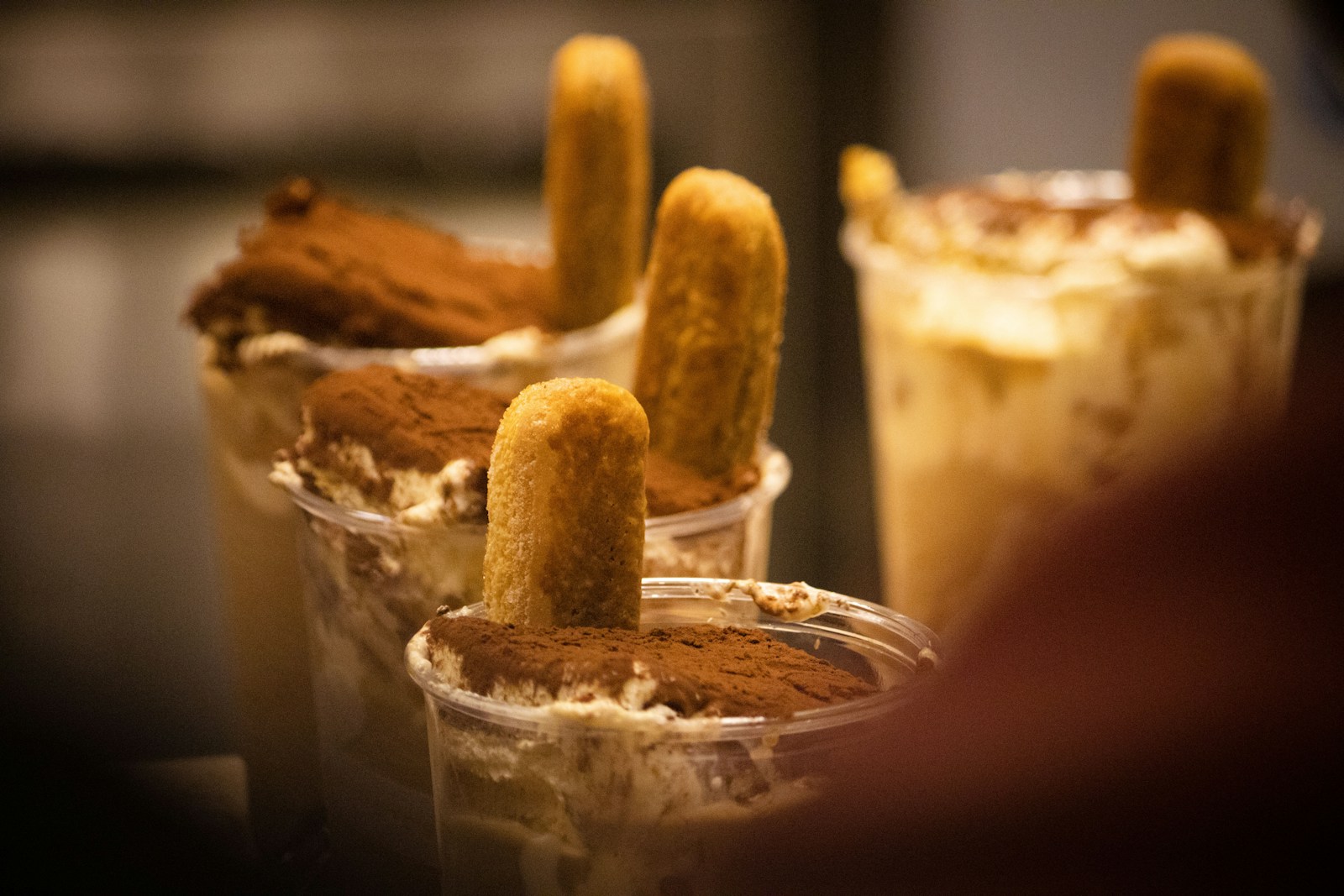
Step 6. Combine the creams. Add the whipped whites to the mascarpone mixture in three additions. Fold each addition from the bottom up, rotating the bowl a quarter turn between strokes, until the cream is completely uniform and no streaks of white remain. Do not stir. The goal is to preserve as much air as possible; the volume of the finished cream should be roughly 50 percent greater than what you started with.
Step 7. Dip the savoiardi. Working one biscuit at a time, dip each savoiardo in the cooled espresso for exactly one second on each side. One-one-thousand, flip, one-one-thousand. The biscuit should absorb coffee but remain firm. If it goes soft and droops, you dipped too long. The finished layer should be dry enough to hold its shape but moist enough to taste distinctly of coffee.
Step 8. Layer. In a roughly 22 by 30 centimetre glass or ceramic dish, arrange a single layer of dipped savoiardi, breaking biscuits at the edges if needed to fit. Spread half the mascarpone cream evenly over the biscuits with a spatula. Add a second layer of savoiardi. Spread the remaining cream over the top, smoothing it into an even surface.
Step 9. Chill, then dust. Cover with cling film directly touching the surface (or loosely if you prefer a slight skin to form), and refrigerate for at least 4 hours. Overnight is better; the texture of tiramisù improves dramatically between four and twelve hours. Just before serving, dust generously with cocoa powder through a fine sieve. Never dust ahead of time; refrigerated cocoa loses its bitterness and turns muddy.
What a perfect portion looks like
A correct slice of tiramisù should hold its shape when lifted on a spoon, but yield immediately to the tongue. The cream layers should be visibly distinct from the biscuit layers in cross-section. The biscuit should be moist but not soaked; it should have retained its structure. The cocoa should taste of itself — bitter, clean — and should be a textural accent, not the dominant flavour. On the tongue, you should register the mascarpone first, the coffee second, the biscuit texture third, and the cocoa as the final bitter closing note.
If your tiramisù is uniformly soft throughout, the biscuits were over-dipped. If it tastes primarily of sweetness, the sugar was overdone or the cocoa was insufficient. If there is any graininess, the mascarpone was inferior or the yolks were under-beaten.
Common Questions
Does authentic tiramisù contain cream or liquor?
No. The 1972 Le Beccherie original contains only mascarpone, eggs, sugar, savoiardi, espresso, and cocoa. Adding cream or alcohol produces a different dessert, which may be pleasant but is not tiramisù in the protected sense.
Can I use pasteurised eggs?
Yes, and they are recommended for children, pregnant women, and anyone immunocompromised. The texture loss is minor.
Which cocoa powder should I use?
Unsweetened Dutch-process cocoa with high cocoa solids. Valrhona, Cacao Barry Extra Brute, and Pernigotti are standard. Supermarket cocoa works but tastes flatter.
Can I make it ahead?
Yes. Tiramisù improves after 12 hours and holds well for up to 48 hours in the refrigerator. Dust with cocoa only just before serving.
Can I freeze it?
Not recommended. Freezing collapses the structure of the mascarpone cream and makes the savoiardi gummy on thawing. The dessert is best eaten within 48 hours of assembly.
Why does mine taste grainy?
Two likely causes: inferior mascarpone (many supermarket brands have a slightly grainy texture that worsens on standing), or the yolks were not beaten long enough to dissolve the sugar. Beat a full four minutes by hand or two minutes with a mixer.
What to serve alongside
Nothing. A proper Trevisan would serve the dessert at the end of a long Sunday lunch, alongside a small cup of espresso and perhaps a glass of grappa for the adults at the table. No fruit, no whipped cream garnish, no sauce. The dessert is finished as it is.
For readers exploring other pillars of Italian dessert tradition, our piece on Italian Christmas sweets covers the seasonal canon that complements year-round desserts like tiramisù. The tradition is documented further in our deeper background on the classical tiramisù recipe as practised in Treviso households.
A closing note
Ada Campeol reportedly corrected an Australian journalist in 2019 who had described her dessert as “elegant.” She said, with the directness of a Venetian woman in her nineties: “It is not elegant. It is a dessert you make for tired people, and it should taste like that.” That sensibility — warmth, restoration, no pretension — is what the recipe protects. Follow the six ingredients, respect the method, and the tiramisù that appears in your refrigerator overnight will be, in the strictest possible sense, the real thing.