Due casseruole accanto, stessa cipolla, stesso brodo, stessi porcini puliti la mattina. Nella prima c’è il Carnaroli, nella seconda il Vialone Nano. Diciotto minuti dopo, chi assaggia senza sapere quale sia quale descrive due piatti diversi: da una parte il chicco si sente sotto i denti e resta staccato, dall’altra si è aperto, ha lasciato andare amido e il piatto scorre.
Non è un errore di cottura, è la varietà che lavora. Il problema nasce dopo, perché quasi tutte le ricette danno una sola quantità di brodo e un solo tempo di cottura. Chi cambia riso senza cambiare metodo ottiene un risultato che non aveva previsto: o un piatto slegato in cui il condimento resta sul fondo, o una crema dentro la quale il chicco è sparito.
Qui i due risi stanno sulla stessa ricetta di settembre e si confrontano su quello che cambia sul serio: minuti di tostatura, litri di brodo, momento in cui si spegne il fuoco, quantità di grasso nella mantecatura. Alla fine resta una regola sola per scegliere in base alla consistenza che si vuole nel cucchiaio.
In breve: le sei cose che cambiano
- Carnaroli: chicco lungo, tenuta alta, cottura fra i sedici e i diciotto minuti, mantecatura più decisa. Il risultato è compatto, con i chicchi ben distinti.
- Vialone Nano: chicco corto e tondo, rilascio di amido molto maggiore, cottura fra i tredici e i quindici minuti, mantecatura leggera. Il risultato è all’onda, più scorrevole.
- Brodo: circa tre volte il volume del riso per il Carnaroli, un bicchiere in più per il Vialone Nano, sempre bollente.
- Passo critico: il fuoco si spegne due minuti prima del tempo dichiarato sulla confezione, non dopo.
- Porcini: i freschi si rosolano a parte in padella larga, i secchi si ammollano e la loro acqua, filtrata, entra nel brodo.
- Tempo: quaranta minuti di lavoro effettivo, più il brodo che deve essere già caldo quando si comincia.
Risotto ai porcini, dosi e attrezzatura per quattro
Trecentoventi grammi di riso, ottanta a testa, sono la dose giusta per un primo di peso. Con i porcini freschi servono circa quattrocento grammi di funghi già puliti, che diventano molto meno una volta rosolati. Con i secchi bastano quaranta grammi, che sembrano pochi ma corrispondono a poco più di trecento grammi di fresco reidratato.
Il resto è una lista corta: una cipolla bianca piccola o uno scalogno, un bicchiere di vino bianco secco, un litro e mezzo di brodo vegetale leggero, cinquanta grammi di burro freddo, sessanta grammi di Parmigiano Reggiano grattugiato al momento, olio extravergine, prezzemolo, sale e pepe. Il brodo di carne, in questo piatto, copre i funghi: meglio un brodo di sedano, carota e cipolla, tenuto sul leggero.
La casseruola conta più di quanto si creda. Serve larga e bassa, con il fondo spesso, in modo che il riso stia in uno strato di due o tre centimetri: così il liquido evapora in modo regolare e la cottura resta uguale dal centro al bordo. Una pentola alta e stretta cuoce prima sotto e lascia indietro la superficie.
Il chicco visto da vicino: amido, forma, tenuta
La differenza fra i due risi sta nel rapporto fra i due amidi del chicco. L’amilosio tiene la struttura e resiste alla cottura, l’amilopectina si scioglie nel liquido e costruisce la crema. Il Carnaroli, classificato come superfino, ha una quota di amilosio più alta e un chicco lungo che si mantiene intero anche quando si sbaglia di un minuto. Il Vialone Nano appartiene alla categoria semifino, ha un chicco corto, tondo e più poroso, assorbe in fretta e cede amido con generosità.
Da qui discendono tutte le altre scelte. Il Carnaroli va aiutato a diventare cremoso, perché da solo non lo diventa abbastanza; il Vialone Nano va trattenuto, perché da solo esagera. Sul mercato il Vialone Nano coltivato nella pianura veronese porta il marchio IGP, mentre il Carnaroli è una varietà senza denominazione geografica propria, coltivata soprattutto fra le province di Pavia, Vercelli e Novara.
| Parametro | Carnaroli | Vialone Nano |
|---|---|---|
| Categoria commerciale | Superfino | Semifino |
| Forma del chicco | Lungo, affusolato | Corto, tondeggiante |
| Tostatura | Due o tre minuti | Non oltre due minuti |
| Brodo per 320 grammi | Circa un litro | Circa un litro e un quarto |
| Cottura | Sedici-diciotto minuti | Tredici-quindici minuti |
| Burro in mantecatura | Cinquanta-sessanta grammi | Trenta-quaranta grammi |
| Consistenza finale | Compatta, chicchi staccati | All’onda, scorrevole |
| Margine di errore | Ampio | Stretto |
Porcini freschi o secchi, come cambia il piatto
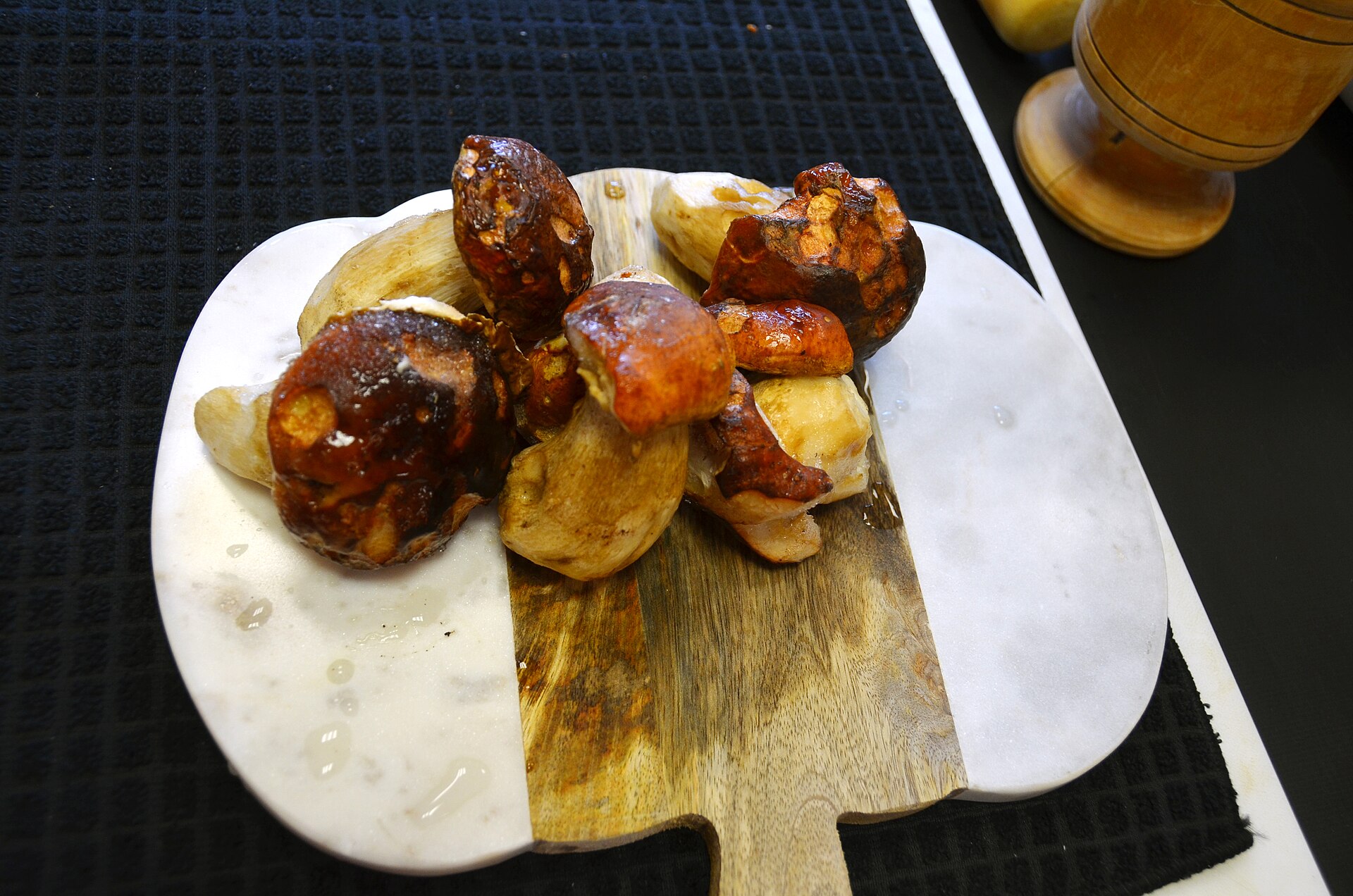
Sotto il nome di porcino, al banco, sta un gruppo di specie vicine fra loro, a partire dal Boletus edulis. Il porcino fresco di settembre ha il gambo sodo, i tubuli chiari e un odore netto di bosco umido. Si pulisce con un coltellino e un panno appena inumidito, mai sotto il rubinetto: la carne è una spugna e l’acqua che assorbe finisce poi in padella e lessa i funghi invece di rosolarli. Il gambo si raschia, la base terrosa si taglia via, la cappella si spazzola.
I porcini secchi non sono un ripiego, sono un altro ingrediente. Concentrano un aroma che il fresco non ha, e l’acqua di ammollo, venti minuti in acqua tiepida, è la parte più preziosa: si filtra con un telo fitto e si lascia sul fondo l’ultimo dito di liquido, dove si è depositata la sabbia. Quel liquido va nel brodo, non nel lavandino. Gli stessi funghi rosolati funzionano anche fuori dal risotto, per esempio sopra una polenta tirata densa.
Chi raccoglie da sé ha un passaggio in più prima della cucina. Gli ispettorati micologici delle aziende sanitarie identificano i funghi destinati al consumo familiare, con orari e modalità che cambiano da provincia a provincia: è il modo più semplice per non affidare a una fotografia sul telefono una decisione che non ammette errori. Vale anche una regola di prudenza sulla cottura: i porcini si mangiano cotti, e le fettine crude in insalata restano una preparazione da limitare a esemplari giovani, sanissimi e in quantità piccole.
Il brodo: quanto, quanto caldo, quanto saporito
Il brodo deve sobbollire nella pentola accanto per tutto il tempo. Ogni mestolo freddo abbassa la temperatura del riso, ferma il rilascio dell’amido e allunga la cottura di minuti che poi non si recuperano. Non serve tenerlo a bollore pieno, basta che fumi.
La quantità non è mai esatta, perché dipende da quanto evapora, dalla larghezza della casseruola e da quanto è vecchio il riso. Il riso appena raccolto assorbe meno di quello dell’annata precedente. Per questo si tiene sempre mezzo litro di margine e si aggiunge un mestolo alla volta, quando il precedente è stato quasi tutto bevuto e la spatola passata sul fondo apre una scia che si richiude piano.
Sul sale conviene essere avari fino alla fine. Il brodo si riduce, il Parmigiano ne porta parecchio, il fondo dei funghi pure. Si assaggia a due minuti dal termine, quando il volume del liquido non cambia più.
La tostatura, due minuti che decidono la tenuta
Tostare significa scaldare il chicco asciutto finché i bordi diventano traslucidi e il centro resta bianco e opaco. In quei minuti l’amido superficiale si compatta e forma una specie di pellicola che rallenta l’ingresso dell’acqua: è la ragione per cui un riso tostato bene resta al dente e uno tostato male si sfalda.
Il Carnaroli sopporta due o tre minuti di fuoco vivo, anche a secco, prima che si unisca il soffritto. Il Vialone Nano no: il chicco è più tenero e oltre i due minuti comincia a spaccarsi ai bordi, con il risultato paradossale di rilasciare troppo amido troppo presto. Se arriva odore di pane tostato, si è andati lunghi.
Il vino entra subito dopo, a fuoco alto, e deve evaporare del tutto: si capisce quando smette di salire l’odore pungente dell’alcol e resta solo quello del vino. Se il brodo arriva prima che il vino sia sfumato, l’acidità rimane nel piatto e si sente fino alla fine.
Procedimento passo dopo passo
- Porta il brodo a sobbollire. Se usi i secchi, ammollali ora in acqua tiepida per venti minuti e tieni da parte il liquido filtrato.
- Scalda una padella larga con un filo d’olio, alza la fiamma e rosola i porcini freschi tagliati a fette spesse mezzo centimetro, pochi per volta. Devono colorire, non sudare. Sala solo alla fine, aggiungi il prezzemolo tritato e mettili da parte.
- Nella casseruola larga fai appassire la cipolla tritata fine in olio e una noce di burro, a fuoco basso, senza colorarla. Serve morbida e trasparente, cinque o sei minuti.
- Alza la fiamma, versa il riso e tostalo. Due o tre minuti per il Carnaroli, non più di due per il Vialone Nano, mescolando perché non attacchi.
- Sfuma con il vino bianco e lascia evaporare completamente.
- Comincia con il brodo, un mestolo alla volta. Mescola quanto basta a staccare il riso dal fondo: girare in continuazione rompe il chicco.
- A metà cottura unisci due terzi dei porcini rosolati e, se li usi, i secchi strizzati e tritati grossolanamente. Continua con il brodo e con l’acqua di ammollo filtrata.
- Assaggia due minuti prima del tempo dichiarato. Il chicco deve avere un centro appena resistente. Spegni lì: il riso continua a cuocere nella propria acqua.
- Manteca fuori dal fuoco come descritto nella sezione seguente, poi copri e lascia riposare due minuti.
- Sbatti la casseruola, aggiusta di sale e pepe, impiatta e completa con i porcini tenuti da parte. Non servire bollente: appena sotto quella soglia i funghi si sentono di più.
La mantecatura cambia con il riso che hai scelto
La mantecatura è un’emulsione fra il grasso del burro, l’amido rilasciato dal riso e l’acqua rimasta. Si fa a fuoco spento, e non è un dettaglio: sopra una certa temperatura il burro si separa e invece della crema resta un velo unto. Conviene aspettare un minuto dopo aver spento, aggiungere il burro freddo di frigorifero a cubetti e il formaggio, coprire e lasciare che il calore residuo faccia il lavoro.
Con il Carnaroli la mano deve essere più pesante. Cinquanta o sessanta grammi di burro e una sbattuta energica della casseruola, tenendola per il manico e spingendola avanti e indietro finché il riso si muove tutto insieme. Serve forza meccanica, perché il chicco ha ceduto poco amido e la crema va costruita.
Con il Vialone Nano si toglie invece di aggiungere. Trenta o quaranta grammi di burro bastano, la sbattuta è breve e il formaggio va dosato con prudenza, perché l’amido già presente lega da solo. Chi manteca il Vialone Nano come manteca il Carnaroli ottiene un risultato pesante, che si asciuga nel piatto in un minuto e diventa colloso. Chi vuole spingere il piatto più in là aggiunge una lama di tartufo bianco a piatto già servito: sul fuoco il profumo se ne va in mezzo minuto.
L’onda: come si controlla la consistenza finale
Il controllo classico si fa inclinando la casseruola di quarantacinque gradi. Il risotto deve muoversi lentamente e tornare indietro come un’onda piatta, senza spezzarsi in blocchi e senza scivolare via come una minestra. Se resta fermo manca liquido, se corre ne è stato aggiunto troppo.
Il secondo controllo si fa nel piatto. Battendo il fondo del piatto con il palmo, il risotto deve stendersi da solo in uno strato uniforme e fermarsi lì. Con il Carnaroli lo strato resta un po’ più alto e i chicchi si vedono; con il Vialone Nano si distende di più e la superficie appare lucida.
La correzione dell’ultimo momento è sempre un mestolo di brodo caldo, mai acqua, e va aggiunta prima della mantecatura. Dopo, si rompe l’emulsione appena costruita.
Gli errori che si vedono nel piatto
Il più comune è il fuoco basso durante la cottura. Il riso deve sobbollire in modo visibile: a fiamma timida resta a bagno, assorbe senza rilasciare e alla fine è cotto ma slegato. Il secondo è la fretta con i funghi, buttati tutti insieme in una padella troppo piccola, dove perdono acqua e lessano; ne esce un grigio uniforme senza nessun bordo dorato.
Il terzo è la mantecatura sul fuoco, che produce quell’unto lucido che si separa mentre si porta in tavola. Il quarto è il riposo saltato: due minuti coperto servono al chicco per uniformare l’umidità, e senza quei due minuti il centro resta più duro del bordo.
C’è infine l’errore di impostazione, cioè il brodo di carne robusto. Con i porcini serve un fondo neutro, altrimenti il fungo diventa un profumo lontano dentro un piatto che sa d’altro.
Domande frequenti
Posso usare l’Arborio se non trovo gli altri due?
Sì, ma va trattato come un riso dal margine stretto. L’Arborio ha il chicco grosso e tende a cuocere prima all’esterno che al centro, quindi conviene tenerlo su un fuoco più moderato, aggiungere il brodo poco per volta e assaggiare già a dodici minuti. La mantecatura sta a metà strada fra le due descritte sopra.
Il riso si sciacqua prima di cuocerlo?
No. Sciacquare porta via proprio l’amido superficiale che serve a legare il piatto. Il riso da risotto si versa asciutto nella casseruola calda, direttamente dalla confezione.
Quanti porcini secchi corrispondono a un etto di freschi?
Dieci o dodici grammi di secchi, perché l’essiccazione toglie quasi tutta l’acqua. Vanno però considerati un ingrediente diverso: il secco porta aroma e profondità, il fresco porta consistenza e la parte carnosa che si sente sotto i denti.
Si può preparare in anticipo?
Solo in parte. Si possono rosolare i funghi, preparare il brodo e tritare il soffritto qualche ora prima. La cottura del riso no: un risotto riscaldato perde l’onda e il chicco si apre. Chi cucina per molte persone si ferma a metà cottura, stende il riso su una teglia fredda e finisce all’ultimo, ma il risultato resta inferiore.
Come si conserva quello avanzato?
In frigorifero, coperto, per un giorno. Il modo migliore di recuperarlo non è riscaldarlo ma trasformarlo: steso a raffreddare diventa la base per dei supplì o per una frittata di riso in padella, dove la compattezza del giorno dopo lavora a favore.
Fra i due risi non esiste una scelta migliore in assoluto: dipende da come si vuole trovare il piatto nel cucchiaio. Chi cerca il chicco distinto e una porzione che tiene la forma prende il Carnaroli e manteca con decisione; chi cerca la cremosità che avvolge, e non ha voglia di contare i minuti, sceglie il Vialone Nano e tiene la mano leggera sul burro.